Blog

  • Introducing AI to a High Performing Team

    Introducing AI to a High Performing Team

    I’m writing this the day after Anthropic’s IPO. I’m sitting on my couch, watching the news, with a sleeping dog on one side of me and a coffee on the other.

    The past week has been full of major tech outages. Depending on which talking head you listen to, the cause has been everything from a sophisticated threat actor to an engineer unplugging the wrong cable.

    Or maybe… AI.

    What strikes me most is that nobody seems to be interviewing engineers.

    Every engineer I’ve spoken to has said roughly the same thing:

    “Someone messed up the release.”

    I think AI is becoming the digital boogeyman of the 2020s.

    We’ve gone from safety researchers leaving the industry to “live in the woods” to headlines blaming AI for massive layoffs. At the same time, AI is proving incredibly expensive for organizations. Bryan Catanzaro, Nvidia’s VP of Applied Deep Learning, summed it up well when he told Axios:

    “For my team, the cost of compute is far beyond the costs of the employees.”

    So here’s the other side of the story.

    AI is a tool.

    I love a good analogy, so let’s lean into one.

    Imagine you’re renovating a room in your house. Traditionally, you either do it yourself or hire a contractor. Now imagine someone invents a tool that makes hanging drywall dramatically easier. Suddenly, it’s accessible to almost anyone. After watching a couple of YouTube videos, I might decide, “I can probably do that.”

    (My wife usually gets nervous when I say those words.)

    That new tool absolutely takes some customers away from contractors. But it doesn’t magically make me a skilled builder. I’ll still make mistakes, probably redo parts of the job, and there’s a decent chance I’ll end up hiring someone to fix my work anyway.

    As it turns out, my wife is usually right.

    The point isn’t that the tool wrecked my house. The point is that the tool made skilled people even more effective.

    The same is true of AI.

    In the hands of someone who understands their craft, AI increases productivity, accelerates experimentation, and often improves quality. In the hands of someone who doesn’t, it simply helps them make mistakes faster.

    That’s why successful AI adoption isn’t really about the technology.

    It’s about people.

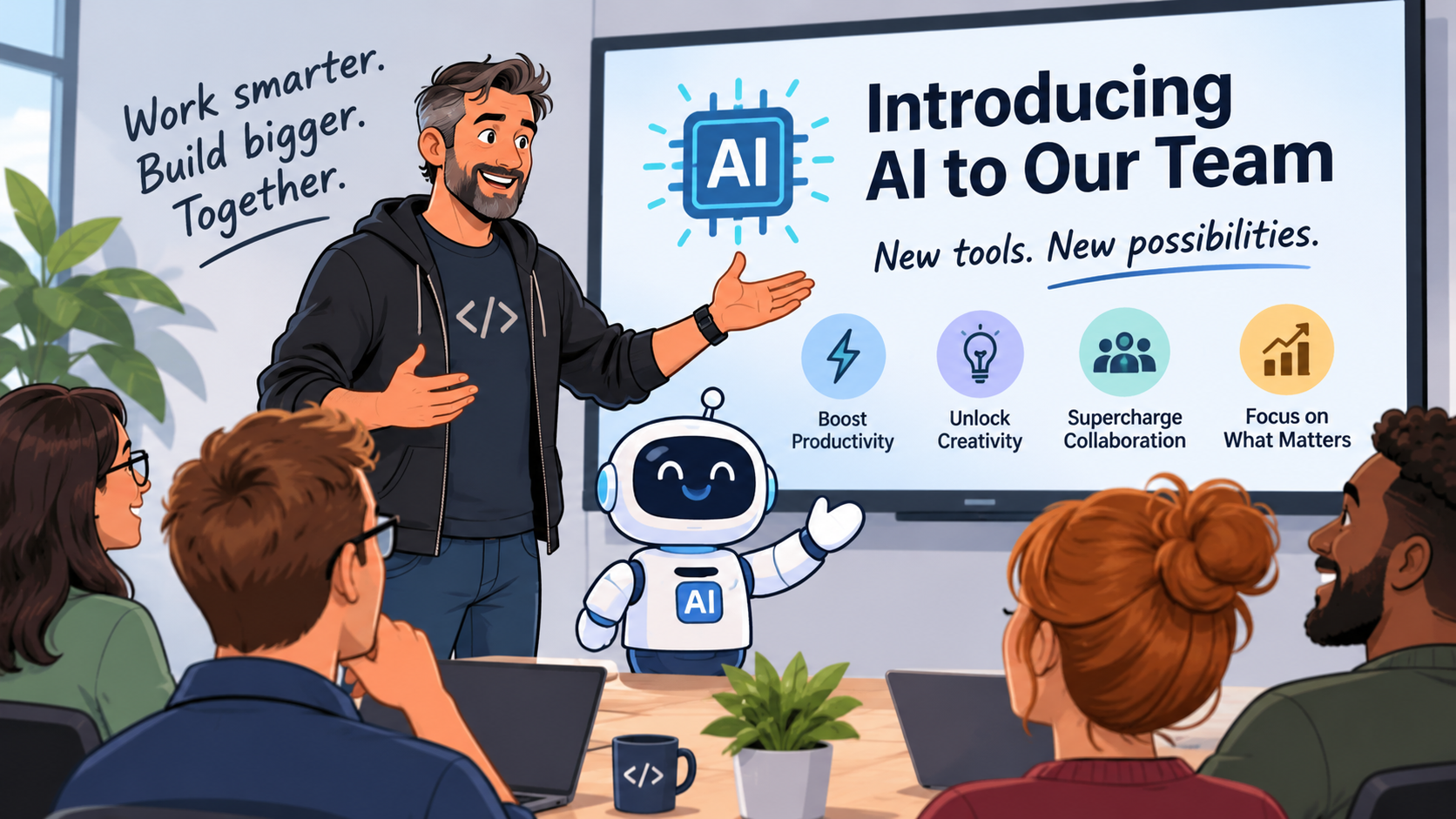
    When leaders introduce AI into an engineering organization, success depends on whether the humans in the loop trust the tools and believe they genuinely improve their work. Trust isn’t built by mandates. It’s built through experience.

    When I introduced AI tools to my team, we took a deliberate approach. We aligned with other engineering leaders first so our messaging and expectations were consistent. We started by integrating AI into our CI/CD pipeline through automated code review, where it could provide value without disrupting individual workflows.

    Next, we offered engineers Copilot and worked with them one-on-one to experiment with it in their IDEs. I also took on a project myself using an AI-first development approach so I could understand both the strengths and the frustrations before asking others to do the same. Finally, we held informal brown bag sessions where engineers shared what they’d learned, what worked, and what didn’t.

    None of this was about forcing adoption.

    It was about building confidence.

    Trying to impose AI on people is usually a waste of time, especially when fear and job insecurity are already in the room. Real adoption happens through collaboration. When teams help evaluate, shape, and integrate new tools into their own workflows, anxiety is gradually replaced by confidence.

    AI shouldn’t replace expertise.

    It should amplify it.

    That’s how you build trust. And that’s how you unlock the real potential of both the technology and the people using it.
  • So I wrote a Screenplay

    So I wrote a Screenplay

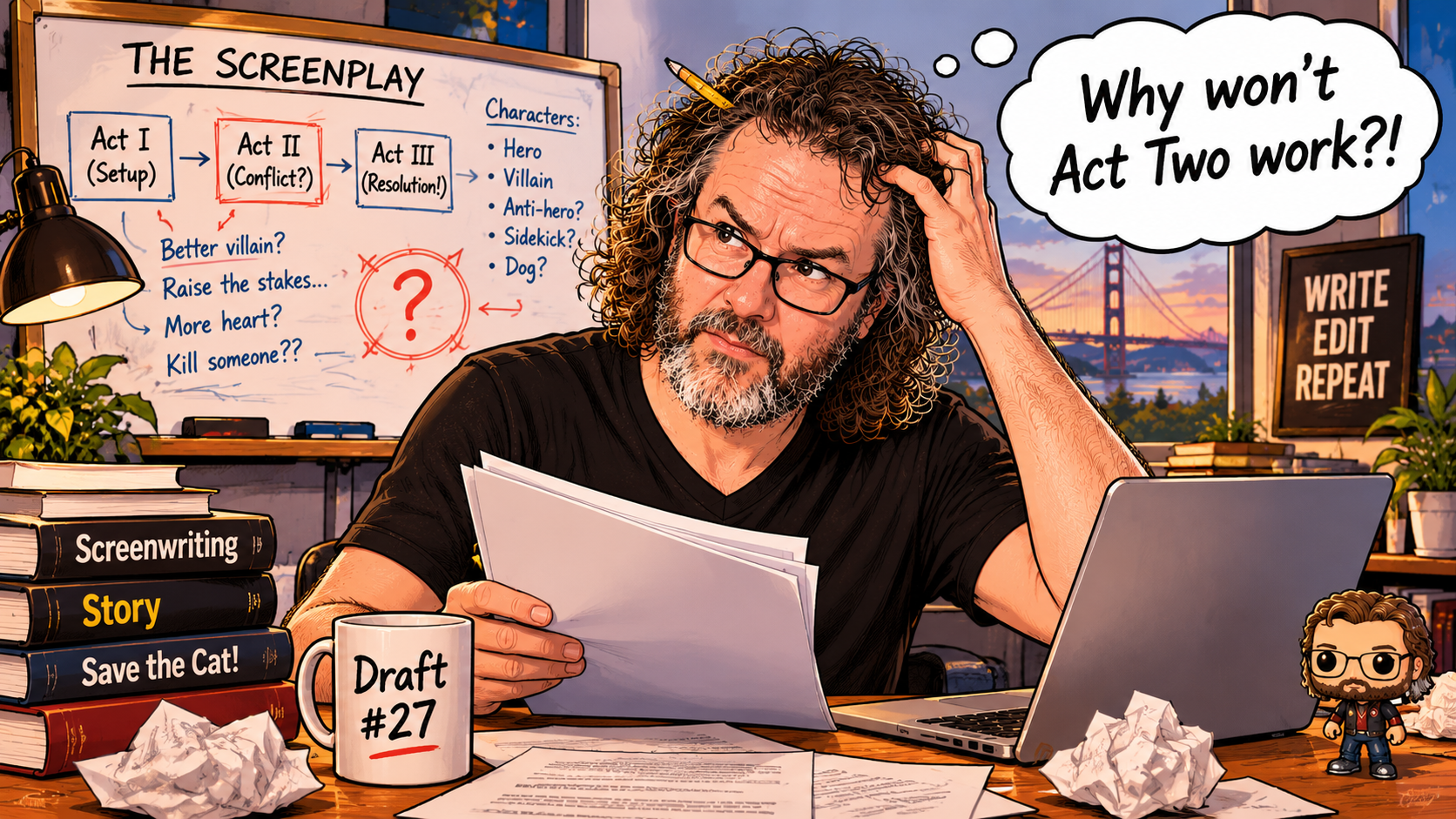
    Have you ever started something, realize you have no idea what you are doing and then panic?

    Er… yeah… no me either… 

    Okay yes, that definitely happened.

    Over the summer I decided to get something down on paper. I had an idea for a movie when walking down the Embarcadero in San Francisco about a year ago. It was a beautiful sunny day, the melting pot of people who inhabit the bay area were passing by my moment of inspiration unperturbed. 

    I have never written anything of length before that wasn’t technical documentation, or a report at college. I definitely was out of my comfort zone. 

    I needed help!

    Fortunately my wife is awesome, and a writer, and put me in touch with a screen writer. I got some really great advice (thanks Robin). I made some adjustments on how I was writing and I started making progress. 

    Something else happened.

    I started having fun… like, a lot of fun!

    For those that don’t know there’s something called writing flow. You get yourself in a state where you just write and write. The words literally flow out of you. Unfortunately you can snap out of it really quickly, you have to protect that space carefully. I found myself in this state writing 10-15 pages at a time, maybe I could get 2-3 pages otherwise.

    I ended up feeling an affinity with my characters. I was sad when I killed some off. I was happy when they got what they wanted. If I was to give anyone advice, it’s simply “just give it a try”. Get the idea out on paper. It might give you something you weren’t expecting. 

  • Hearts 25/26 Season Hangover

    Hearts 25/26 Season Hangover

    From Title Challengers to a Rebuild: A Hearts Fan’s Reality Check

    Well, here’s a big brain dump.

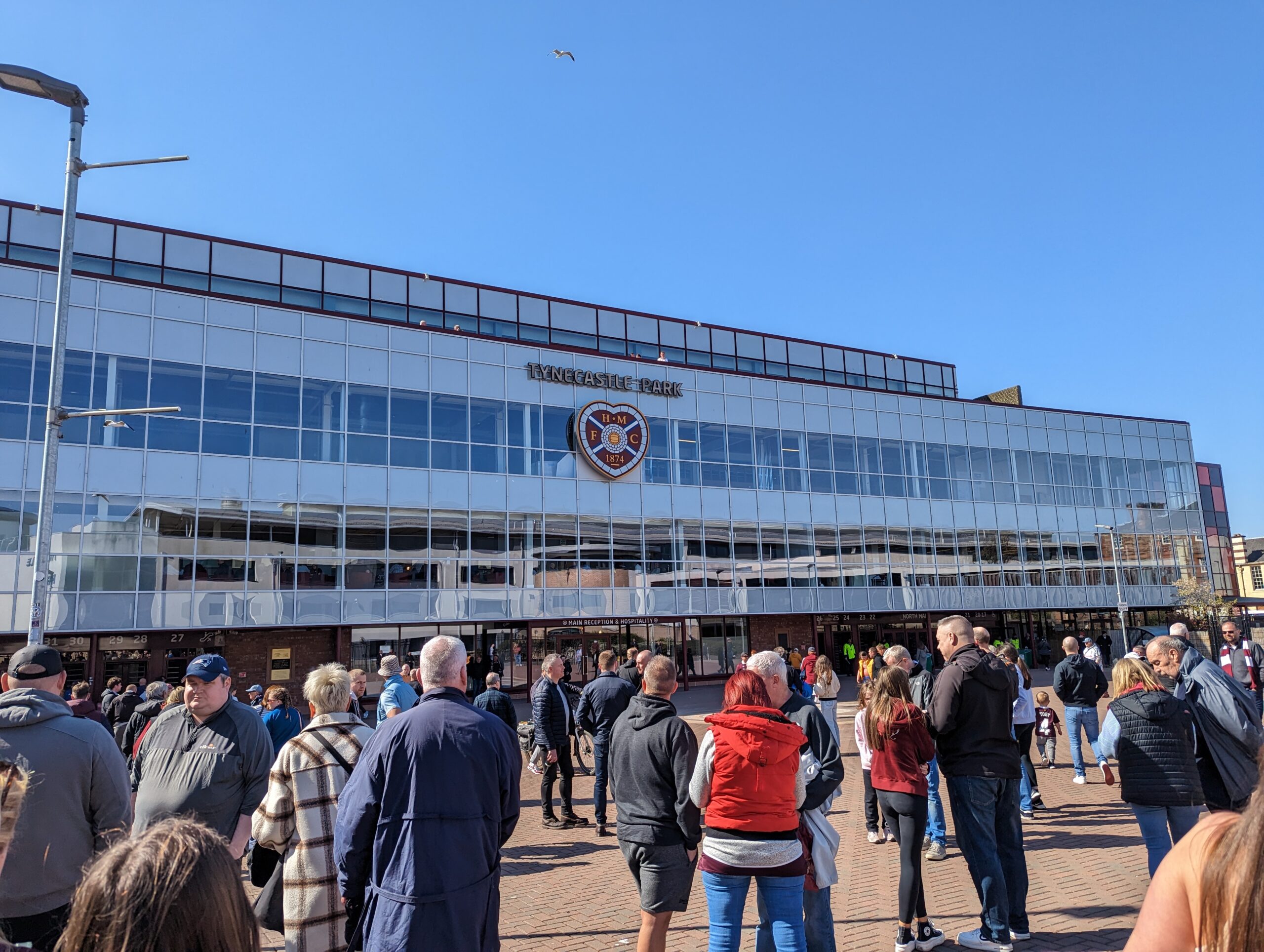
    Last season (2025/26, for when I inevitably come back to this in five years wondering what I was talking about) Hearts did something incredible. We came within five minutes of winning the Scottish Premiership.

    For months people had written us off. Every dropped point was apparently proof we’d bottled it. But looking back now, I don’t buy that narrative.

    It wasn’t a bottle job.

    It was a genuine title challenge from a team that earned the right to be there.

    Unfortunately, we don’t deserve to be there anymore.

    That hurts to admit because it’s not where I want Hearts to be. I want us competing with Celtic and Rangers every season, not hoping for the occasional run. But it’s important to separate what we want from what we are.

    The truth is we probably weren’t a title-winning side last year either.

    Everything just came together at exactly the right time. We had momentum, players exceeded expectations, new signings clicked, and we rode that wave almost all the way to the title. It was football’s version of catching lightning in a bottle.

    This season feels like the hangover.

    Derek McInnes’ Lasting Impact

    Last season Derek McInnes was both the biggest reason we finished second and, strangely enough, one of the reasons we didn’t finish first.

    Over the course of the season he built a disciplined, organised side that believed it belonged near the top. Without him there’s no title race.

    But looking back at those final months, there are a handful of games where we retreated when we should have kept attacking. There were draws that felt like victories at the time but, with hindsight, should have been wins.

    Five minutes separated us from history, but a few more positive decisions earlier in the run-in might have meant those final five minutes never mattered.

    Injuries Changed Everything

    We were also hit at exactly the wrong time.

    Lawrence Shankland’s injury stalled our momentum. Defensive injuries piled up. Ageu, who was supposed to be one of the marquee signings, got injured almost immediately, forcing another rethink.

    Even then, there were positives.

    Braga was outstanding. Kyziridis looked capable of making something happen whenever he got on the ball. Marc Leonard brought calm and balance to midfield.

    The squad wasn’t perfect, but it found ways to compete.

    Reality Has Arrived

    This season was always going to be difficult.

    You can’t expect to recreate a once-in-a-generation title challenge simply because most of the players are still wearing the same shirt.

    Then came the departures.

    Losing players to Rangers gutted the spine of the team. We still haven’t adequately replaced Lawrence Shankland or Cammy Devlin, and that’s impossible to ignore.

    I really wanted JJ Williams to succeed.

    Every Hearts supporter wants new signings to work because it’s better for everyone when they do. But every time I’ve watched him he looks unsure of where he’s supposed to be. He doesn’t create space for himself, doesn’t create space for teammates, and when chances do arrive they too often disappear without troubling the goalkeeper.

    Maybe he’ll come good.

    Right now, though, he simply hasn’t.

    There Are Still Reasons for Optimism

    It’s not all doom and gloom.

    Josh McPake has been exciting to watch. Calvin Miller has added genuine attacking threat. Tom Renaud has impressed me every time I’ve seen him.

    Once again, though, injuries seem determined to stop any momentum before it starts.

    That has become a frustrating theme.

    This Is a Project

    I’ve deliberately avoided talking too much about Wouter Vrancken because I don’t think he’s the problem.

    If anything, he’s almost gone too far in the opposite direction from McInnes. Last season we could be too cautious. This season we sometimes look too eager to attack without enough defensive balance.

    That’s something that can be coached.

    More importantly, I think he’s getting about as much out of this squad as anyone could right now.

    He deserves time.

    This isn’t a finished team; it’s a project.

    Success this season shouldn’t be measured by whether we challenge for the title again. That was never realistic after everything that happened.

    Success should be measured by developing young players, building a coherent style of play, and qualifying for Europe.

    If we can do those three things, we’ll have something far more valuable than a brief title challenge.

    We’ll have the foundations for the next one.